A car that will not start can turn a routine morning into a missed shift or a delayed school run. Before you keep trying the ignition, check your surroundings, note what the vehicle does, and decide whether roadside help or a tow is the next step.
For Minneapolis and St. Paul drivers, fall is a useful time to address starting trouble before colder weather arrives. Cold weather reduces battery power while gasoline and diesel engines require more power to start, according to NHTSA’s winter driving guidance.
Start with your location and safety
If you are in a driveway or parking space, stay clear of moving vehicles while arranging help. If you are stopped in a traffic lane or another dangerous location, tell dispatch immediately. Call 911 if anyone is in immediate danger.
Do not run a vehicle in an enclosed garage. If snow is present, keep the exhaust outlet clear. Your surroundings matter more than getting the engine running quickly.
Describe the symptoms without guessing the diagnosis
Tell the dispatcher what happens when you try to start the car:
- Does the engine turn over slowly?
- Do you hear clicking?
- Do the dashboard lights come on?
- Does the engine turn over but fail to start?
- Has the car needed a jump start recently?
These details help explain the problem, but they do not prove that the battery is the only cause. Avoid repeatedly trying to start the vehicle; follow the starting guidance in your owner’s manual.
When to ask about a jump start
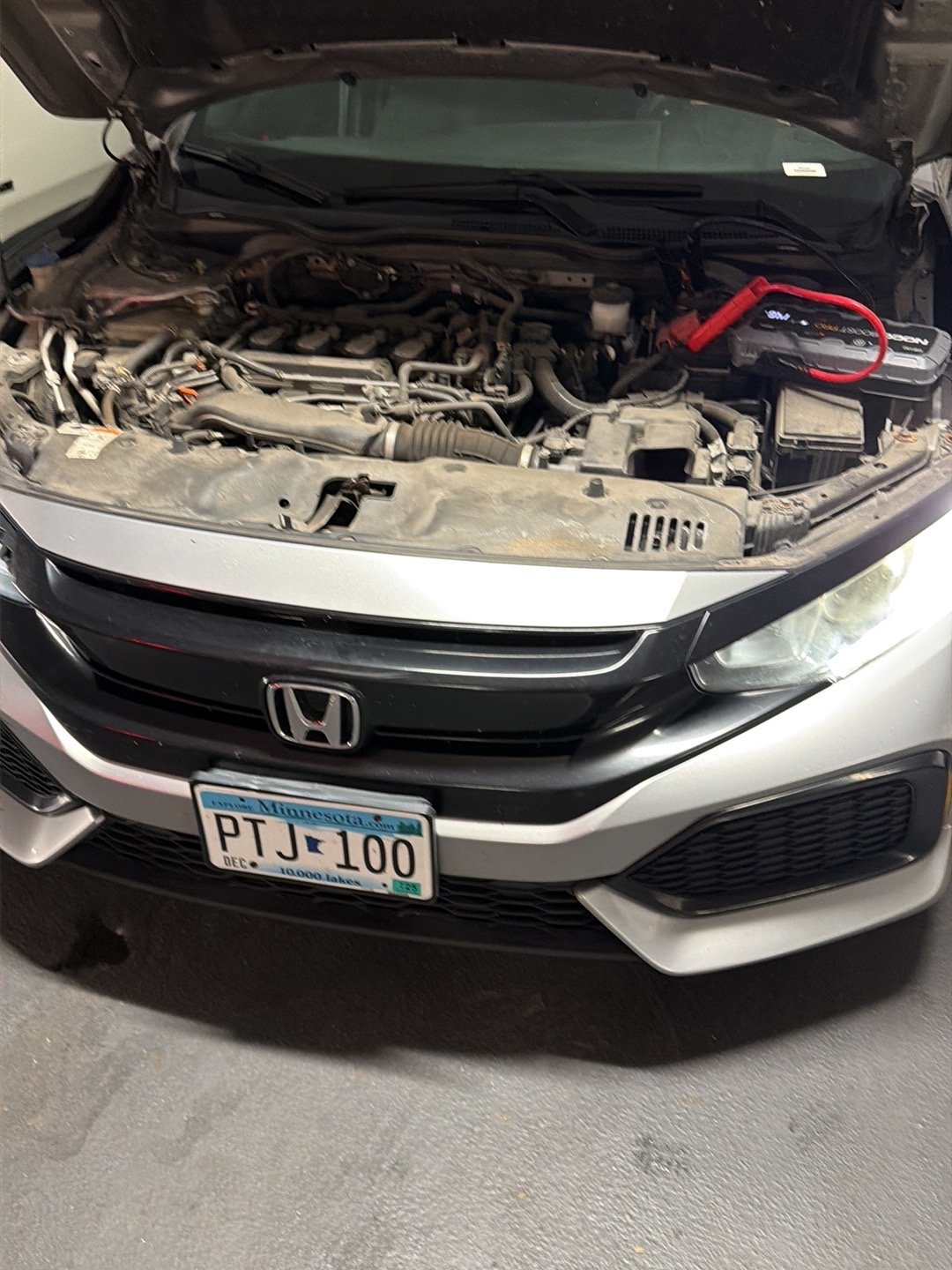
If a discharged battery is suspected, ask about jump-start service in Minneapolis and St. Paul. Share your vehicle’s year, make, model, and exact location so dispatch can confirm whether assistance is appropriate and available.
Use the manufacturer’s instructions for your vehicle. Hybrids and electric vehicles have model-specific procedures; a depleted high-voltage driving battery is a different problem from a discharged low-voltage battery. Do not improvise cable connections or attempt to jump a battery that appears damaged, swollen, leaking, or frozen.
If you are unsure about the procedure or the battery’s condition, leave it to a qualified professional.
When a tow may be the better next step
A jump start cannot resolve every starting problem. Tell dispatch if a previous attempt failed, the vehicle will not stay running, or you notice smoke, a burning smell, or visible damage. Explain the symptoms before requesting another jump.
If the vehicle needs repair rather than roadside assistance, choose a repair destination and ask dispatch to confirm towing options for your vehicle. Do not assume that a car is ready for normal use simply because it starts once.
What to send dispatch from a Minneapolis parking ramp
A street address alone may not be enough to locate a car inside a garage. Include:
- The ramp or property name and vehicle entrance.
- Your level, row, and parking-space number, if available.
- The posted height clearance and any gates or access restrictions.
- Your vehicle’s year, make, model, and starting symptoms.
- Whether you need roadside help or transport to a repair shop.
For a roadside location, give the road name, direction of travel, and nearest exit or cross street. Share a location pin if available, along with a description of where the vehicle is stopped.
Get the battery and charging system checked before winter
NHTSA recommends having a mechanic check the battery, charging system, belts, and needed repairs before winter driving. If starting has become unreliable, schedule an inspection rather than waiting for the next cold morning.
Keep a charged phone, charging cable, flashlight, and warm clothing accessible. Save your roadside assistance contact before you need it, and check any coverage you already have so you know how to request service.
Need help with a car that won’t start?
MSP Towing & Recovery offers towing and roadside assistance in Minneapolis, St. Paul, and nearby communities. Call 612-391-7272 or text 612-402-1111 with your location, vehicle, and symptoms. Dispatch can confirm current availability, suitable service, and an estimate.