If anyone is injured, there is a fire, the vehicle is blocking active traffic, or you are in immediate danger, call 911.
If the vehicle can be moved safely, get fully out of the travel lane. Turn on the hazard lights. When stopped on a shoulder, remain inside with your seat belt fastened unless fire, smoke, or another immediate danger makes the vehicle unsafe. Do not stand beside the vehicle or walk in active traffic.
Winter breakdowns can become safety problems quickly. MSP Towing & Recovery provides winter towing and roadside assistance across Minneapolis, St. Paul, the MSP Airport area, and nearby Twin Cities communities. Service on airport-controlled property requires airport authorization and may be handled by the airport’s designated provider.
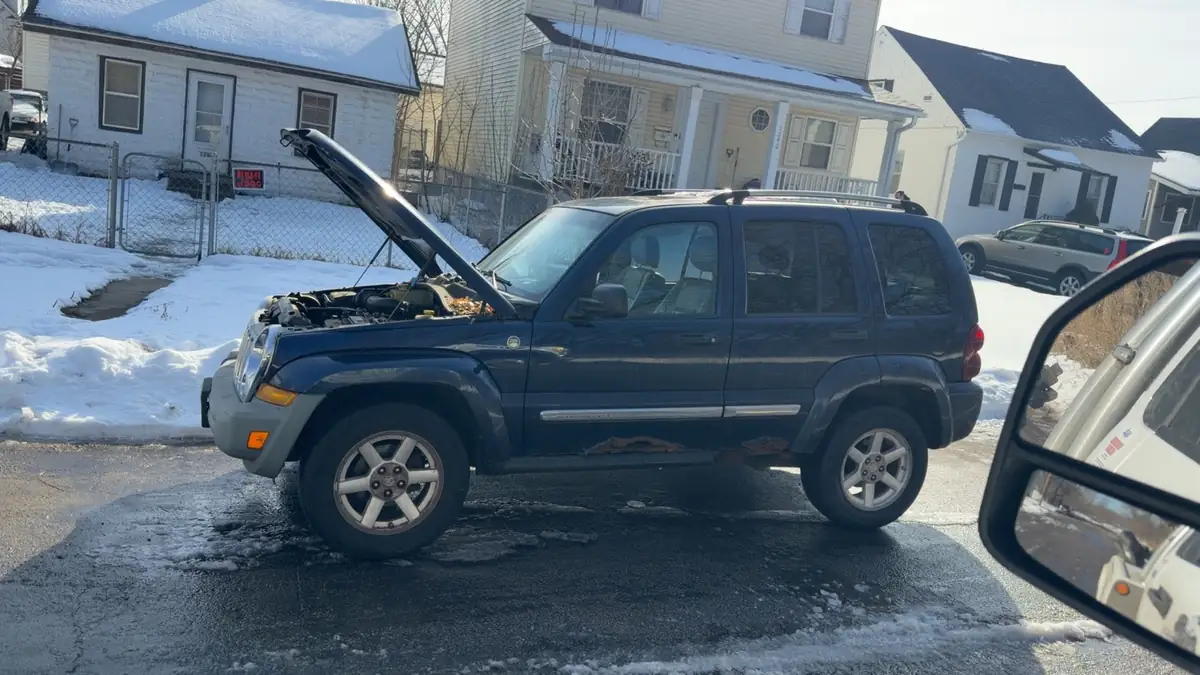
Depending on the vehicle, location, weather, and safe access, the appropriate response may be a jump start, flat-tire service, winch-out, or emergency tow.
Call (612) 391-7272 for winter help
What to do first during a winter roadside emergency
- Protect people before the vehicle. Call 911 for an injury, fire, immediate danger, or a crash obstructing traffic.
- Move only if it is safe. Do not attempt a risky maneuver on ice or enter moving traffic to inspect damage.
- Make the vehicle visible. Use hazard lights. Place a warning device only when it can be done without entering or walking beside active traffic.
- Share a precise location. Give the nearest intersection, facility name, ramp name, level, row, stall or pillar number, and your direction of travel.
- Describe the vehicle’s condition. Tell dispatch whether it rolls, steers, brakes, has keys, has visible damage, or is stuck in snow.
- Check current restrictions. Review live MN511 road conditions and follow road closures and law-enforcement instructions.
If it can be checked without entering traffic, keep snow away from the exhaust. Run the engine only briefly as needed for warmth; do not idle for long with the windows closed or in an enclosed space. See the current NHTSA winter-driving guidance.
Do you need roadside help, a winch-out, or a tow?
The vehicle will not start
Cold weather reduces battery power and increases the power an engine needs to start. A jump start may be appropriate when the battery is discharged, but a technician must assess the vehicle and access conditions. Tell dispatch what happens when you turn the key or press the start button, whether the lights work, and whether the vehicle is in a garage or ramp with a posted clearance.
The vehicle is stuck in a snowbank or ditch
Stop if repeated attempts are digging the tires deeper, moving the vehicle toward traffic, or creating a safety risk. Tell dispatch which wheels are stuck, whether the vehicle is on a slope, and whether it can steer or roll. Describe the slope, nearby fixed objects, and available working area. Do not attach a strap or choose an anchor yourself.
If dispatch requests a photo, use only the approved channel, take it from a safe place, and exclude unrelated people, IDs, paperwork, and license plates. The information can help the team assess whether winch-out service or towing may be appropriate.
A tire is flat or damaged
Roadside tire help may be possible if the vehicle is in a safe, level location and has a usable spare. Towing may be safer when the wheel, suspension, or tire is damaged, the spare is unusable, or the vehicle is exposed to moving traffic. Review flat-tire service and tell dispatch what you can see without entering traffic.
The vehicle has collision or mechanical damage
If the vehicle cannot roll, steer, or brake normally, or if there is leaking fluid, significant wheel damage, or a safety concern, do not attempt to drive it. Call 911 when the incident presents an immediate hazard; otherwise, request an emergency tow and describe the condition accurately.
What winter dispatch needs from you
Accurate information helps dispatch evaluate the equipment and a safe meeting point:
- Your callback number, city, and nearest intersection
- Facility, parking ramp, terminal, level, row, stall, door, or pillar number
- Direction of travel and nearest exit when on a highway
- Vehicle year, make, model, drive type if known, and approximate size
- Whether the vehicle rolls, steers, brakes, and has keys
- Whether a wheel is locked, the parking brake is engaged, or another vehicle blocks access
- Whether the vehicle is in active traffic, a snowbank, ditch, garage, ramp, lot, or curb lane
- Posted height or access restrictions
- Visible damage, a flat tire, warning lights, or the sound made when attempting to start
For a reusable checklist, see what to tell a tow-truck dispatcher in Minneapolis.
Minneapolis snow-emergency parking
Minneapolis uses a three-day system after the City declares a Snow Emergency:
- Day 1 begins at 9 p.m. Do not park on either side of a Snow Emergency Route until it is fully plowed.
- Day 2 begins at 8 a.m. Do not park on the even-address side of non-Snow-Emergency-Route streets or either side of parkways until fully plowed.
- Day 3 begins at 8 a.m. Do not park on the odd-address side of non-Snow-Emergency-Route streets until fully plowed.
Minneapolis may impose separate winter parking restrictions. Always check the live City notice and posted signs. Sources: Minneapolis Snow Emergency parking rules and winter parking restrictions.
St. Paul snow-emergency parking
When St. Paul declares a Snow Emergency, it begins at 9 p.m. and lasts 96 hours:
- Beginning at 9 p.m., parking is not allowed on signed Night Plow Routes or in downtown St. Paul.
- Beginning at 8 a.m. the next day, parking is not allowed on unsigned Day Plow Routes until the street is plowed to the curb.
- During cleanup, a vehicle can remain at risk of ticketing and towing if it is parked where the street has not been plowed to the curb.
Follow the current City map, alerts, and posted signs. Source: St. Paul Snow Emergency parking rules.
Roseville winter parking
Roseville’s general rule prohibits street parking after two inches or more of continuous snowfall. The restriction can last up to 48 hours or until snow removal is complete. Some signed pilot areas can use different instructions, so follow the current sign and City map for the exact block. Source: Roseville Snow & Ice Removal.
See the Roseville towing guide
Richfield snow emergencies
Richfield states that a Snow Emergency is automatically in effect after four inches of snow and may also be declared earlier by the City. Street parking is prohibited until streets are plowed curb to curb. The City identifies designated emergency parking areas that are available for a limited period after a declaration; use only the current City notice and posted signs. Source: Richfield winter parking and snow plowing.
See the Richfield towing guide
Winter roadside help around MSP Airport
If your vehicle is inside an MSP-operated parking ramp, first use a blue-light Call for Assistance intercom and follow the airport’s current Services & Security instructions. Do not summon an outside service vehicle into an airport-controlled ramp unless airport staff authorizes it.
MSP has separate Terminal 1 and Terminal 2 facilities. Before requesting help in the airport area, identify the terminal, parking facility, level, row, nearest door, and posted clearance. Do not use only an airline name as the location.
Airport rules prohibit parked or unattended vehicles on the terminal-front roadways. Curb access is limited to picking up or dropping off a traveler who is already waiting. The airport directs waiting drivers to short-term parking or its complimentary Post Road cell-phone lots.
Official information: MSP Services & Security, MSP Parking FAQs, pick-up and drop-off rules, and terminal information.
See the MSP Airport-area towing guide
Check Minnesota road conditions before you move
MN511 road conditions come from pavement and atmospheric sensors or direct field observations. Even a “Normal” condition can include icy bridge decks. “Travel Not Advised” means conditions are very dangerous and emergency response may be impossible; “Road Closed” means travel is not allowed except for emergency vehicles.
Check live MN511 conditions and review MN511 road-condition definitions. When a route is closed or unsafe, a towing company cannot override the closure. Dispatch may need to identify a safer meeting point or wait until authorized access is possible.
Prepare a winter roadside kit
NHTSA recommends carrying supplies that can help with common winter tasks and delays:
- Snow shovel, broom, and ice scraper
- Sand or another abrasive traction material
- Jumper cables
- Flashlight and warning devices
- First-aid kit and blankets
- Cell phone and charger
- Water, food, and necessary medicine
Before a trip, check weather and traffic reports, consider postponing nonessential travel when roads are unsafe, and tell someone your route and expected arrival time. Source: NHTSA Winter Weather Driving Tips.
Winter towing and roadside help across the Twin Cities
Safe access, service type, and equipment depend on weather, road restrictions, vehicle condition, location, and availability.
- All towing and roadside services
- Roadside assistance
- Jump-start service
- Winch-out service
- Emergency towing
- All service areas
Winter roadside questions
Can a tow truck reach me during a snowstorm?
It depends on road closures, visibility, traffic, snow depth, safe access, and equipment availability. A “Travel Not Advised” or closed road may prevent access. Give dispatch an exact location and follow MN511 and law-enforcement instructions.
Can you jump-start a vehicle in a parking ramp?
Service may be possible when the vehicle and ramp can be accessed safely and the property permits access. Provide the ramp name, level, row or stall, entrance, and posted height clearance before dispatch. For an MSP-operated airport ramp, contact airport staff first.
What if my car is buried by a snowplow?
Do not enter traffic or repeatedly spin the tires if doing so creates a risk. Describe which wheels are blocked, the depth and position of the snow, the slope, and nearby obstacles. A safe photo can help dispatch assess whether roadside assistance, a winch-out, or towing may be appropriate.
Does a city Snow Emergency mean MSP Towing & Recovery towed my car?
Not necessarily. City parking enforcement and impound procedures are separate from private roadside and towing requests. Check the applicable city’s official impound or towing instructions when a parked vehicle is missing.
What should I do if my car will not start inside an MSP Airport ramp?
Use a blue-light Call for Assistance intercom and follow the airport’s current Services & Security instructions. Airport staff can direct you to the authorized provider and explain access requirements.
Call for winter towing or roadside assistance
Call (612) 391-7272 for winter roadside assistance or towing.
Tell dispatch the city, exact location, vehicle year/make/model, whether it rolls, steers, and brakes, whether you have the keys, and whether it is in traffic, a parking ramp, snowbank, ditch, or lot. Service availability and safe access depend on weather, road restrictions, vehicle condition, location, and equipment. If anyone is injured or in immediate danger, call 911 first.
Official sources
- City of Minneapolis — Snow Emergency parking rules
- City of Minneapolis — Winter parking restrictions
- City of St. Paul — Snow Emergency parking rules
- City of Roseville — Snow & Ice Removal
- City of Richfield — Winter Parking & Snow Plowing
- MSP Airport — Services & Security
- MSP Airport — Parking FAQs
- Minnesota 511 — Live road conditions
- Minnesota 511 — Road-condition definitions
- NHTSA — Winter Weather Driving Tips